Individualised mental health care
Individualised mental health care means tailoring assessment, treatment and support to the unique needs, preferences, strengths and context of each person. It moves away from one-size-fits-all approaches and recognises that effective care depends on understanding the whole person — their symptoms, lived experience, culture, values, social circumstances and goals.
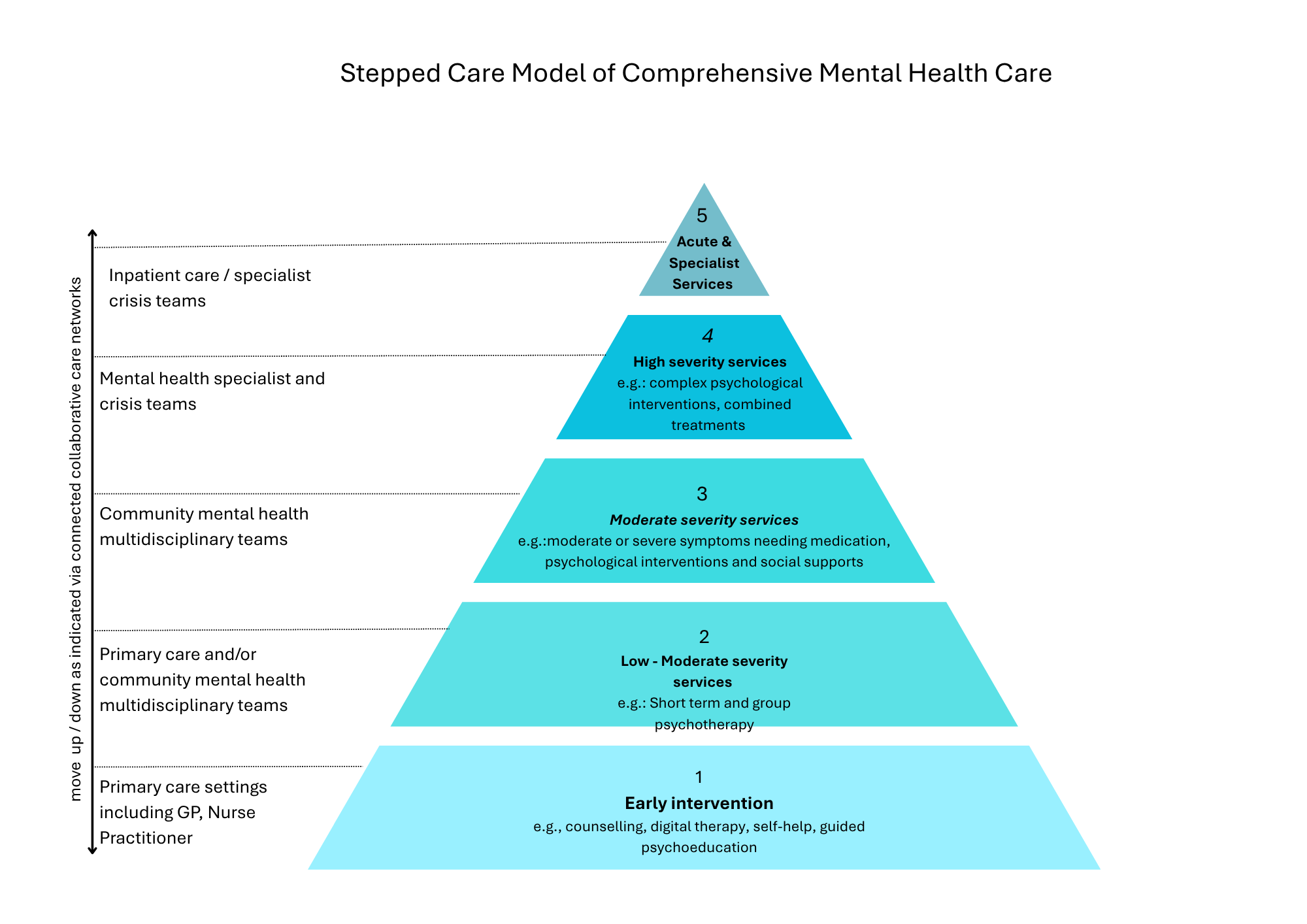
In the mental health field, the Stepped Care Model (SCM) is a structured, tiered framework for delivering personalised, person‑centred support, ensuring individuals receive care that matches the level of intensity they need. As a person’s circumstances and mental health needs evolve, the model allows services to be adjusted accordingly, supported by a workforce with diverse skills and advanced practice capabilities. This adaptability is strengthened by modern technology and innovative service delivery approaches. Since its introduction, the SCM has been implemented in multiple countries, including Australia, reinforcing the need for mental health career pathways that equip clinicians to work flexibly across different levels of care.
How it might look in practice
Comprehensive Assessment
Understand the person’s mental health, physical health, social circumstances, strengths, goals and support needs.
Collaborative Care Planning
Work with the person to develop a shared understanding of their needs and choose care options that align with their preferences.
Flexible, Evidence-Based Support
Provide the right mix of therapies, medication, practical supports and care intensity, adapting as needs change.
Culturally Safe and Trauma-Informed Care
Deliver respectful, inclusive care that recognises cultural identity, lived experiences and the impact of trauma.
Ongoing Review and Coordination
Monitor progress, adjust care plans as needed, and ensure smooth transitions between services and levels of care.
Family and Carer Involvement
Where appropriate and with consent, involve families and carers in planning, education and support.